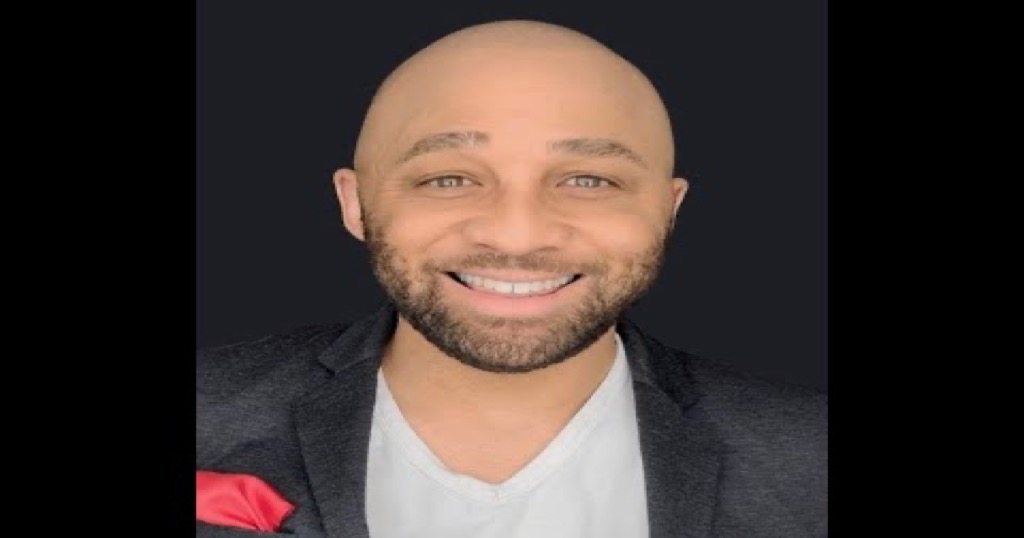
Tony Dominguez: 'The World's Most Elite Sober Coach'
By Jeff Grant
We were happy to host Tony Dominguez, a FiA Certified Interventionist and Hypnotherapist who the Financial Times of London calls the world’s most elite sober coach, as our May 2025 White Collar Support Group Tuesday Night Speaker Series presenter. He told us in his first minute that he is not comfortable with the title, then gave the hour to what sits underneath addiction, debt and overwork. You can watch the full recording above.
Give this one your evening if you have been drinking more since the indictment and telling everybody you are fine, if you are the spouse who has started keeping count, or if you are six months home and wondering why the relief never came. Tony has been the frightened kid, the man who turned himself in at Los Angeles County Jail, and the person a family calls at two in the morning. None of it comes from a distance.
What Tony Dominguez covered
- 0:00 Jeff Grant opens with the group's three new projects
- 8:48 How the Financial Times profile actually came together
- 10:00 Redondo Beach, violence at home, and learning to read a room
- 14:40 Turning himself in, and four and a half months in county jail
- 17:40 Why shame is under almost every behavior he sees
- 19:45 His son's mother leaves, and the bottom that follows
- 24:50 Getting sober in 2003, and six months of being uncomfortable
- 29:50 Ashley asks who he is, and he learns what trust means
- 35:20 A first sober companion shift that ends at a window
- 41:10 Inside the team: rented houses, meds, and reintegration
“There's this, this idea, this stigma that that if you have fame or money or prestige or if you went to the right university or if you got the right degrees, that somehow you are immune to certain things that that belong to the human species.”
Why shame sits under the addiction, the debt and the overwork
Tony did not open with credentials. He opened in Redondo Beach, California, in a young Mexican Catholic family where violence at home ran alongside Bible study, catechism and confirmation. What he took out of that house was a survival skill, reading a room for threat and working out fast who to avoid and who to win over, and what he was hiding while he did it is what he now finds under nearly every client he takes. Alcohol. Pills. A debt nobody said out loud. A marriage that ended because the work never stopped. The behavior differs. What sits under it usually does not.
A federal case manufactures shame at industrial scale, and it does not lift the day the sentence ends. Nobody is exempted from any of it by money, by prestige or by the right degrees, which lands differently in a room where most of us had the credentials and got indicted anyway. Dr. Erin Frey has taken us through what the research says about who carries it, and Doug Passon has shown us how the same material becomes a sentencing mitigation case. Tony comes at it from the inside. He got very good at shaming himself, and he can tell you what it bought him.
it just seemed like the more I felt shame and self pity, that the louder I needed the distraction to be.
The distraction kept getting louder. It ended on a compound with meth cooking on it and men just home from murder sentences, where the only kindness on offer came from the most frightening person there.
How do you build trust with someone who trusts no one?
By 2007 Tony was a precious metals broker who had grown a conscience and could no longer sell, and a friend mentioned a luxury rehab in Malibu that needed a counselor. He laughed, said yes two weeks later, and spent his first hours on shift moving a glass table away from a young woman having a seizure.
At the end of that same shift a client named Ashley would not let him go. She had been to every rehab in the country with the best psychiatrists her father could buy. She wanted to know who he was. She had just said things to him it had taken her therapists a year and a half to reach. What he understood standing there is the sentence his career is built on.
when dealing with shame and secrets and self harm for abuse of any sort, we don’t trust ourselves and we don’t trust you
Then she asked if he was coming back. What he said out loud, and what he privately meant by it, is on the recording. He left the sales money for work that paid almost nothing, and could not have said then what he was getting instead. Members who sat with Brian Cuban, the lawyer and author who took us through his own recovery, will know the trade, and anyone who heard Tom Hardin on his seven-year wait to be sentenced will know what a secret costs while you carry it.
What a sober companion actually does
Most people have never heard of this work. Tony had not either, and his honest first question was whether it amounted to babysitting. It is not. The shape of it arrived on his first weekend, which ended with a locked door, his shoulder against it, and a client already halfway out a second story window.
The steady version is quieter and stranger. Sometimes there is a whole apparatus around one person, a therapist, a psychiatrist, someone like Tony living in the house, often a rented one, because taking someone out of their own neighborhood is half the work. His longest run was six months in the Hollywood hills with a global figure, her band, her daughter and a rotating cast he compared to an Andy Warhol film, in a house where John Lennon spent part of his lost weekend. He has worked in ten countries since, for trust fund kids and for people living on the street, out of a suitcase.
If the question underneath your question is what the first year home looks like without the crutch, watch this one alongside Building A New Life After Prison, then read Craig Stanland on the story that says people like us never really change.
About Tony Dominguez
Tony Dominguez is a FiA Certified Interventionist and Hypnotherapist who has worked as a recovery coach and sober companion since 2007. He works predominantly with high net worth individuals in entertainment and business, and his approach draws on neuroscience, behavioral psychology, hypnotherapy and his own recovery, which began in 2003. Confidentiality governs every stage, from live-in support to managing medication protocols, which is why he says he works in the shadows. He grew up in Redondo Beach, California and now lives in Stockholm, Sweden.
This presentation was free, open to all, and held on Zoom on May 13, 2025, as part of the Tuesday Night Speaker Series hosted by the White Collar Support Group, which meets every Monday evening on Zoom.