Alex Little, Esq.: Criminal Defense Trial Attorney
By Jeff Grant
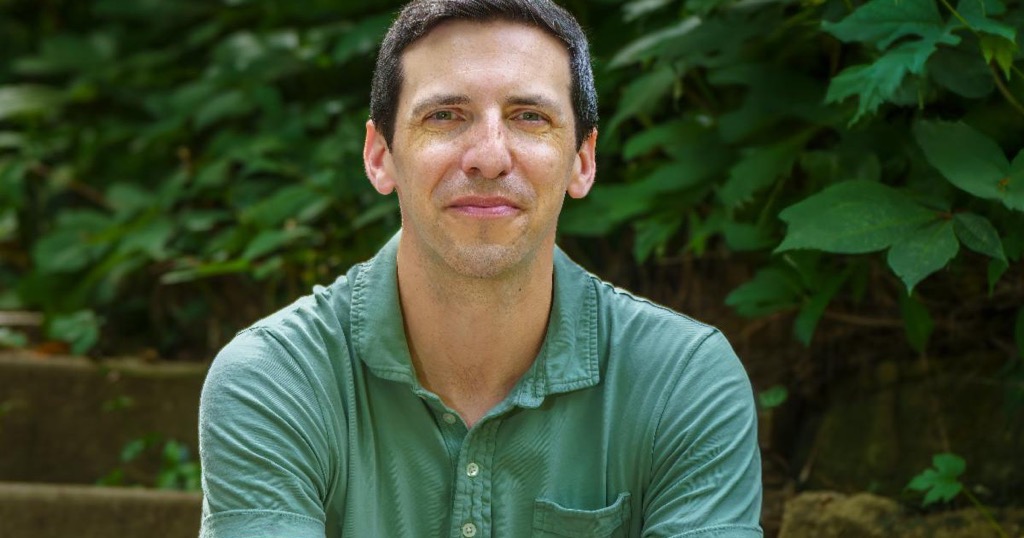
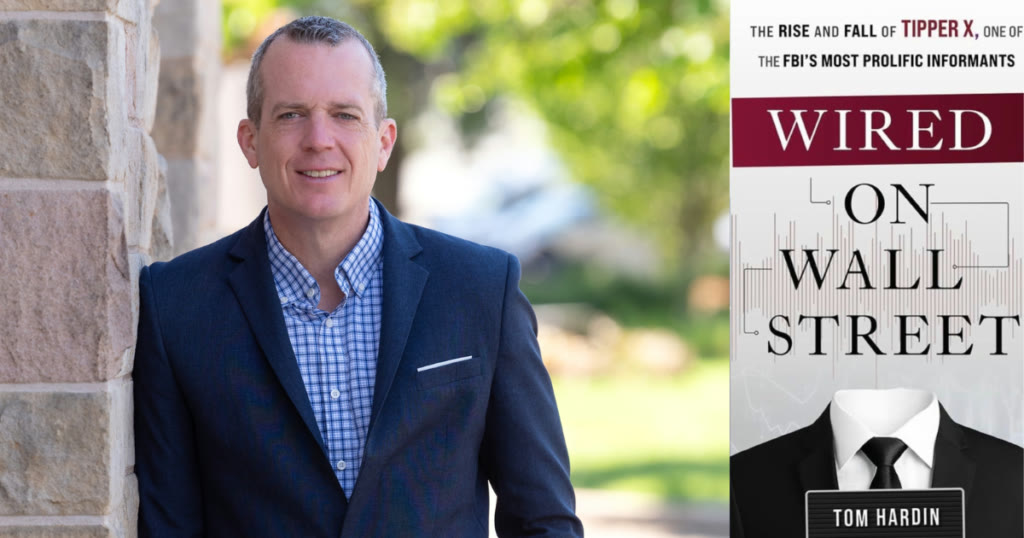
We were honored to host Alex Little, Esq., a white-collar and criminal defense attorney who represents some of the highest-profile defendants in the country, as our April 2026 White Collar Support Group Tuesday Night Speaker Series presenter. Alex skipped the topics most of us have already sat through and gave the hour to the first 72 hours of a federal case, the window that opens the day you learn you are a target. You can watch the full recording above.
If agents have already come through your door, if a subpoena or a civil investigative demand just landed, or if you are the spouse trying to work out what to do tonight, this is the hour to give it. What Alex offers is not a lecture on statutes but a method for thinking clearly in the worst week of your life.
What Alex Little covered
- 9:48 What happens when you get the knock from the FBI
- 11:08 The exponential graph: why early beats late, every time
- 15:00 Diagnosis begins with silence as an active strategy
- 15:45 The magic wand test: defining what winning actually means
- 16:35 Swallow the ocean before you form a single theory
- 17:55 Abraham Wald and the bullet holes you never get to see
- 20:55 Empathy step one: nobody is the bad guy in their own story
- 26:10 Mapping the real power structure behind the org chart
- 28:50 Why you have to commit to one defense story
- 32:50 Lead with emotion, and first do no harm
“Every step down the timeline makes it exponentially more difficult for you to get a good result in the criminal justice system.”
What to do in the first 72 hours after the FBI knocks
By the time anyone tells you, the case is old. Alex has represented people whose investigations ran eight years before the target found out. You are not going to close that gap in three days.
What you’re really trying to do is not make it worse.
Everyone tells you not to talk. Alex treats silence as an active strategy rather than a defensive crouch, and he means something stricter than staying quiet with the FBI. No clarifying emails. No calls to the people who were in the room. Nothing online. You cannot listen while you are talking, and in those hours listening is the whole job.
There is a question he puts to clients almost immediately that turns “I want to clear my name” into something specific enough to aim at, and most people have never been asked it. There is also a rule for what you do with the quiet: take in everything, decide nothing. A theory formed on day one quietly rewrites what you remember, and he has watched people script their own indictment that way. It is also why forensic accountants earn their keep in week one rather than year three.
The most useful question in that stretch is not what the government did. It is what it did not do. Who never got a target letter. Which location was never searched. Alex traces the habit to a mathematician named Abraham Wald and a study of bullet holes in World War II bombers. The planes anyone could examine were the ones that survived their hits.
Why you have to figure out what the prosecutor wants
Nobody is the bad guy in their own story. Alex learned that in conflict resolution work with President Carter, and he brings it to a room with every reason to reject it. This is not sympathy for the agent who frightened your family. It is the working assumption that the prosecutor across from you has a conviction rate, a supervisor, a press release he would like to write, and a real fear of looking foolish.
You have to put bones, you have to put muscle on that person on the other side to be able to get a party on the other side that you can do business with.
Skip that and you are negotiating with a ghost. Alex was blunt that the real power structure is almost never the one on the org chart, and that in clemency work the question is never only what the president will do but who is advising him.
The uncomfortable half is that the same map has to be drawn of you. He makes clients name their own constraints out loud early: money, family, professional licenses, sobriety, reputation. Brian Cuban has spoken to our group about how heavy that sobriety constraint gets under exactly this kind of pressure.
Why you only get one defense story
Alex has watched lawyers hand a prosecutor five defenses and hope one of them takes. It does not work. Multiple theories signal uncertainty, and uncertainty about your own client’s innocence is blood in the water. One story, fitted to the facts and to who the client actually is, argued the same way every time.
The part that is easy to miss is where he thinks that story has to land. The rational version is table stakes. The one that moves a prosecutor is the one that prosecutor can carry to a supervisor without losing face, and the example Alex gives is small, ordinary and entirely human. He uses the O.J. trial to show what he means, and it is not the argument about evidence you are expecting.
He pairs all of it with the rule he grew up around, since his father is a physician. First do no harm. Before any step, ask whether it leaves you worse off than doing nothing. Clear that test, he said, and then advocate like you are not coming back.
About Alex Little
Alex Little is the founder and managing partner of Litson PLLC, a boutique federal litigation and white-collar criminal defense firm based in Nashville that works nationwide. He was an Assistant U.S. Attorney before he was a defense lawyer, and before law school he worked in international diplomacy at The Carter Center and in intelligence at the CIA. He has been trying cases for twenty years and now leads a team that includes four former federal prosecutors, focused on federal criminal defense, clemency and pardons, and high-stakes civil litigation. His forthcoming book, Spies, Saints, and Stingers, lays out the Diagnose, Empathize, Preach framework he walked us through here.
This presentation was free, open to all, and held on Zoom on April 14, 2026 at 7 PM ET. It is part of the Tuesday Night Speaker Series hosted by the White Collar Support Group, which meets every Monday evening on Zoom.